


A Post-Incident Report Is Not a Weather Report
A Microsoft 365 outage, a wave of infrastructure failures, and the uncomfortable question of what happens when software delivery accelerates faster than engineering discipline.
A Microsoft 365 outage, a wave of infrastructure failures, and the uncomfortable question of what happens when software delivery accelerates faster than engineering discipline.

Your unanswered email is a matter of priorities. Theirs is apparently negligence. From beer invitations to API calls, we keep mistaking work we can't see for work that doesn't exist — and charging our quick questions to someone else's time.

Option A costs $10, Option B costs $30. Case closed — except the invoice is lying to you, and the real bill arrives later with your name on it. Unmeasured cost isn't zero cost. It's just cost your spreadsheet has decided to hide.

Meaningless is the optimistic case. When a true finding survives the writing stage and then dies anyway — killed by a scoreboard, or overruled a floor above you — blameless has quietly become the fig leaf over reckless.

The blameless post-mortem was one of the best ideas in operational culture. Then we kept the word and threw away the meaning — and turned incident reports into horoscopes with a severity rating.
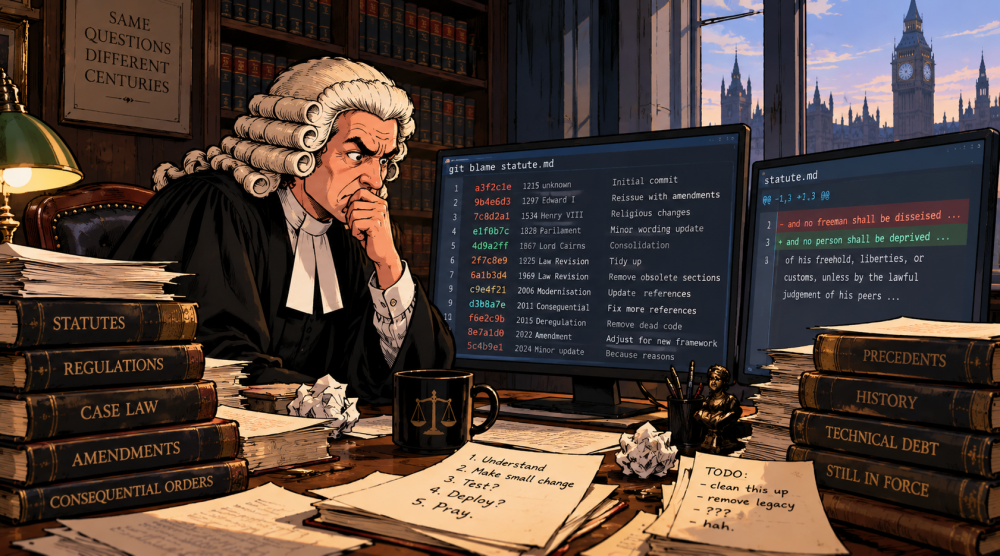
Every anti-pattern you curse at 4am has a legal twin. A tour through carrot jam, immortal Japanese floppy disks, a British reform that broke a statute from 1881, the euro's continent-scale adapter pattern, a 'temporary' Polish tax still running fifteen years later — and three clauses of Magna Carta that have been live in production since 1215. Because law is just the oldest legacy codebase on Earth.
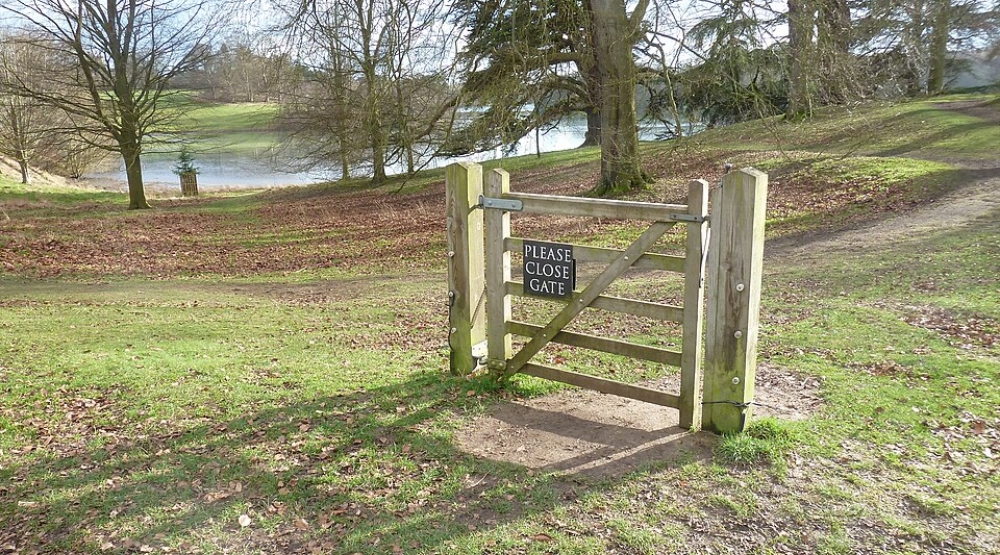
Last week I called software geology. This week it gets a name: Chesterton's Fence. A tour through roundabouts, the human appendix, and a cronjob nobody dares touch — and why 'I don't see the point' is the worst possible reason to remove anything.

Larry Tesler gave us cut, copy, and paste. He also gave us an uncomfortable truth: complexity never disappears. It just moves. The only question is who gets stuck with it.

Everyone loves a low TTD. Management strokes their egos over it, dashboards celebrate it, and alert systems multiply to chase it. Here is why that is the wrong metric entirely.
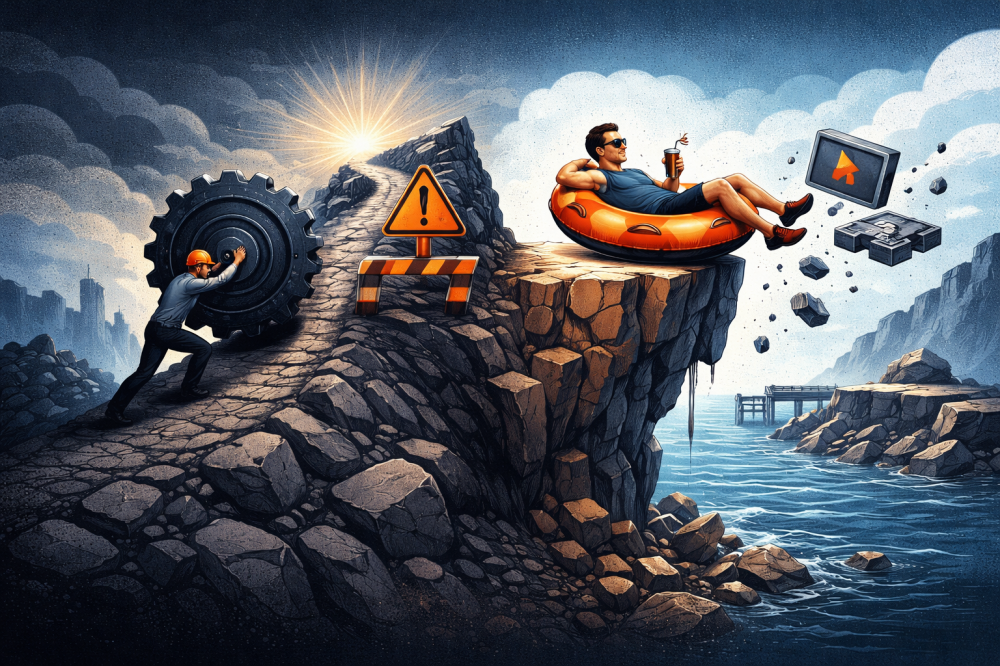
We've turned "frictionless" into a religion. But a system with zero resistance is just a system waiting to slide off a cliff. Maybe we've accidentally engineered our own stupidity.