


The SaaSpocalypse Is Upon Us. Again.
AI made writing software cheaper. It didn't make understanding reality optional. Seven Adobe alternatives, 56 RGB profiles, and the inconvenient difference between generating code and building a product.
AI made writing software cheaper. It didn't make understanding reality optional. Seven Adobe alternatives, 56 RGB profiles, and the inconvenient difference between generating code and building a product.

Every anti-pattern you curse at 4am has a legal twin. A tour through carrot jam, immortal Japanese floppy disks, a British reform that broke a statute from 1881, the euro's continent-scale adapter pattern, a 'temporary' Polish tax still running fifteen years later — and three clauses of Magna Carta that have been live in production since 1215. Because law is just the oldest legacy codebase on Earth.

Every program expands until it can read mail — and so does every company. A field guide to bloat, strategic diversification, and the vanishing brake that used to say "enough."

Last week I called software geology. This week it gets a name: Chesterton's Fence. A tour through roundabouts, the human appendix, and a cronjob nobody dares touch — and why 'I don't see the point' is the worst possible reason to remove anything.

Conway's Law is not a rule you break — it is a mirror. Your architecture is a fossil of an org chart that no longer exists, and the real bill it hands you is not ugly code but the cost of coordination.
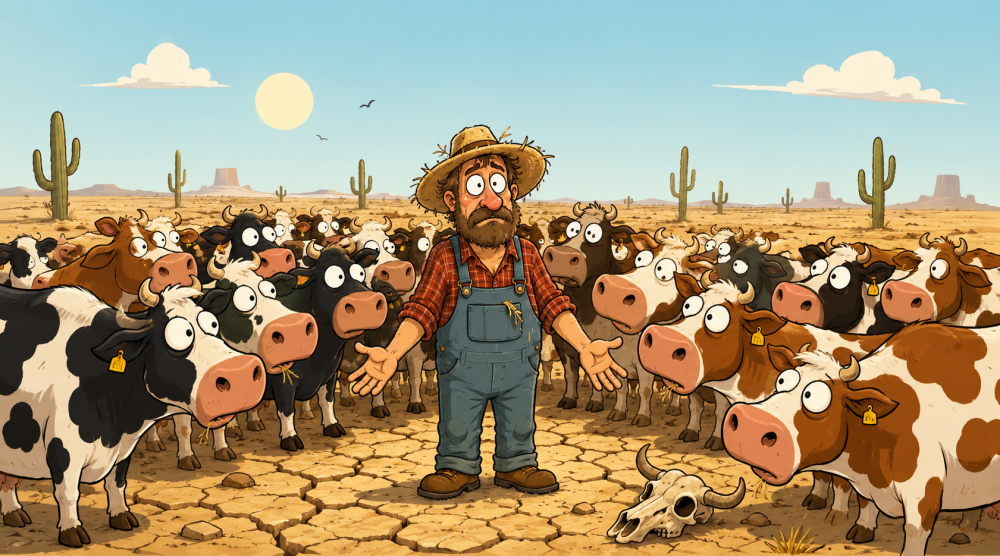
When everyone acts with perfect individual rationality, the shared pasture dies and every cow starves. Here is why the Tragedy of the Commons is hiding inside your cloud bill, your dependency tree, and your codebase—and what governance can actually do about it.

Ditching your monitors to fix distraction is like curing hunger by cutting off legs. A rant about cognitive offloading, digital hygiene, and why fixing Problem A with a solution for Problem B is the industry's favourite disease.

Professional deformation is the cognitive bias where we view the universe through the narrow keyhole of our expertise. Here is why banging on a complex system with only one tool usually just breaks the delicate gears holding it together.

The fundamental flaw in our design of societies, economies, and organizations is a simple, mathematical misunderstanding: we confuse stability with optimality.
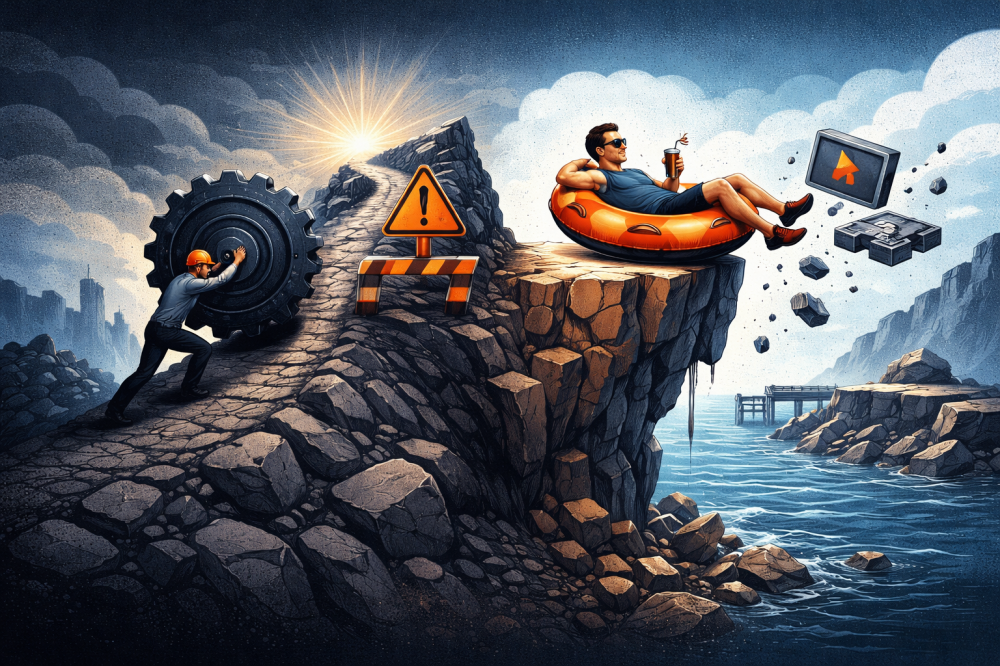
We've turned "frictionless" into a religion. But a system with zero resistance is just a system waiting to slide off a cliff. Maybe we've accidentally engineered our own stupidity.